14 Small Bedroom Storage Ideas That Actually Work in Tiny Rooms
My first apartment bedroom was roughly the size of a parking space. The closet — and I’m using the word “closet” generously here — was a narrow cupboard that held about eleven shirts before it started rejecting new ones. Everything else I owned lived on the floor, in laundry baskets, or draped over the one chair, which eventually collapsed under the weight of my poor decisions.
Here’s what nobody tells you about small bedrooms: the problem is almost never that you own too much stuff. It’s that your bedroom has secret storage space you’re not using. Dead corners, blank walls, the void under your bed — that’s a whole second closet hiding in plain sight. These are the ideas that actually fixed my bedroom, tested across three tiny apartments and one very patient landlord.
1. The Under-Bed Zone Is the Biggest Closet You’re Not Using
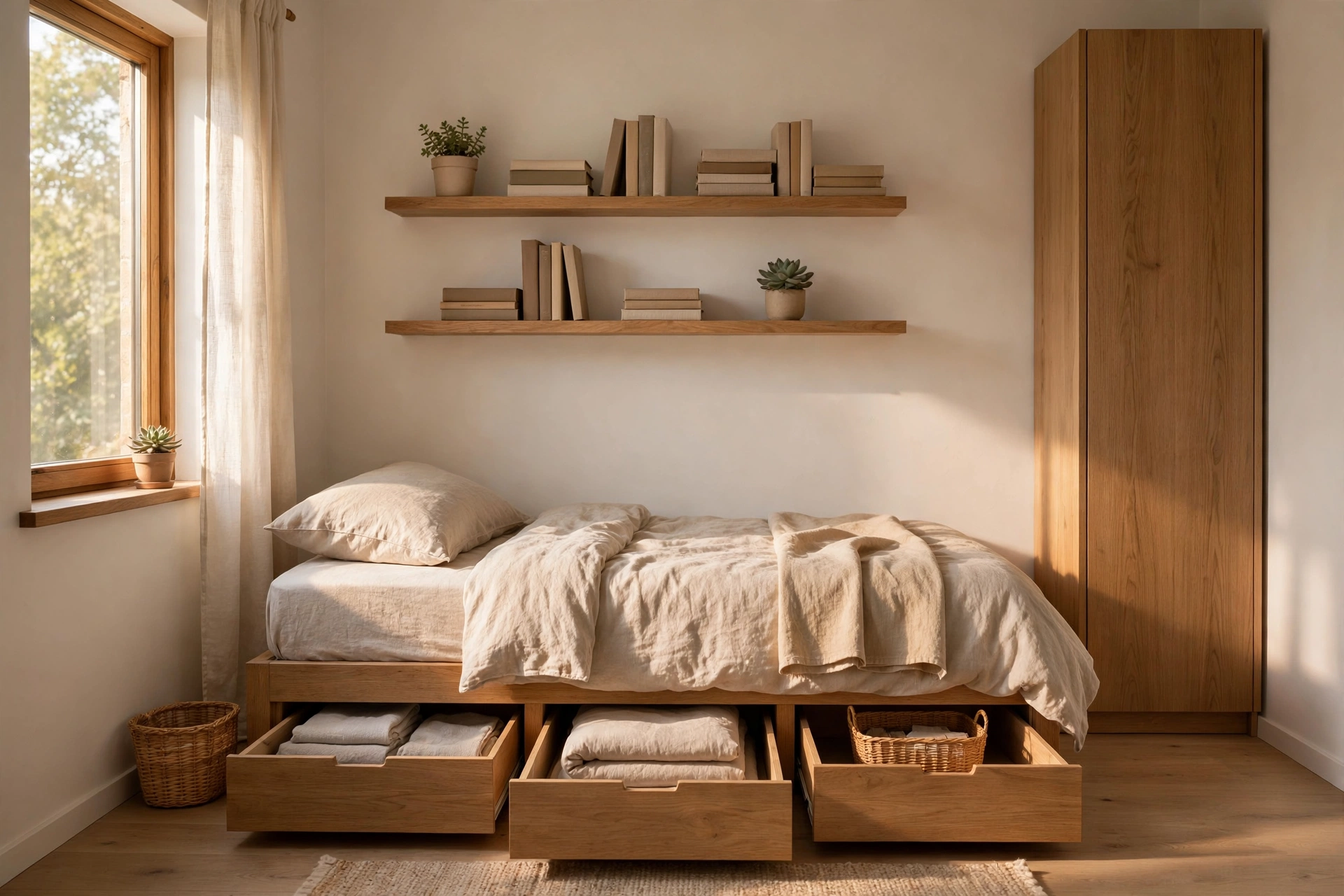
A queen bed covers roughly 33 square feet of floor. If you’re not storing anything under it, you’re renting a closet and using it as a dust farm. Low, flat storage bins on wheels slide under most bed frames and swallow off-season clothes, spare bedding, the bag you only use for trips — all of it, invisible.
I keep three bins under mine, labeled like a nerd: winter, bedding, random-but-important. The labeling matters more than you’d think. Unlabeled bins become mystery boxes, and mystery boxes are just clutter with lids. This is the single highest-impact move on this list — do it first, before you buy anything else. It’s the same “use the space everyone ignores” logic behind my favorite hidden storage tricks, and it works because nobody ever looks under a made bed.
2. Vacuum Bags Are Cheating and I Fully Endorse It
Those vacuum-seal bags that shrink a winter coat into a pancake? Absolute game changers for small bedrooms. One bag holds an entire season of bulky sweaters and takes up less room than a pizza box. Slide them under the bed or stack them on the top shelf of the closet where you’d never reach anyway.
Honest warning: the cheap bags lose their seal after a few months and slowly re-inflate like sad balloons. Spend slightly more on the ones with the double-zip seal. I’ve had the same set for four years and they’re still flat. The dollar-store ones lasted one winter and taught me a lesson about false economies.
3. Your Nightstand Is Wasting Prime Real Estate
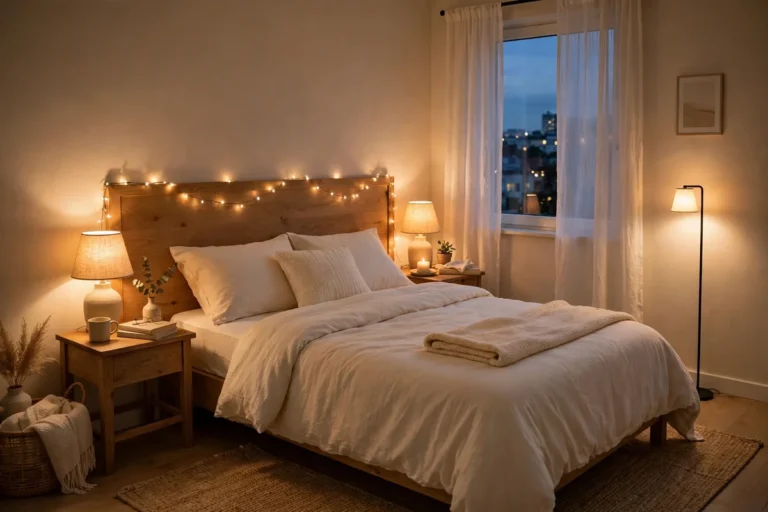
A cute little side table with nothing but a top surface is a storage crime in a small bedroom. Swap it for a nightstand with drawers — even two shallow drawers — and you instantly gain a home for chargers, meds, the book you’re pretending to read, and all the small stuff that otherwise colonizes every flat surface.
If you’re really tight on space, a wall-mounted nightstand (basically a floating shelf at mattress height) keeps the floor clear and still holds the lamp and phone. Floor space you can see reads as room space your brain believes in. I wrote more about this illusion in my small bedroom decor ideas — visible floor is the cheapest square footage you’ll ever “buy.”
4. Steal the Back of the Door
The back of your bedroom door is a full wall doing absolutely nothing. An over-the-door organizer with clear pockets handles scarves, belts, sunglasses, the handbag rotation, and all the accessories that currently live in a pile on the dresser. A hook-style over-door rack holds tomorrow’s outfit, the bathrobe, and the bag for work.
Landlords can’t complain about something that hangs over a door and comes off without a trace — this is pure renter-friendly territory. My current door holds six hooks and a pocket organizer, and I genuinely don’t know where I’d put any of that stuff otherwise.
5. Go Tall, Not Wide
This is the geometry lesson that fixes small bedrooms: floor space is finite, but wall height is free. One tall, narrow dresser holds as much as a wide low one while eating half the footprint. A slim 5-drawer chest that’s 18 inches wide tucks into the gap between the bed and the wall that you thought was useless.
Measure the weird gaps in your room — beside the bed, next to the closet, that awkward corner by the window. Tall narrow furniture was basically invented for those spots. I have a 14-inch-wide rolling cart wedged between my bed and the wall holding socks, underwear, and chargers. It looks ridiculous. It works perfectly.
6. Floating Shelves: Your Walls Are a Second Floor
Everything on your dresser top and nightstand could live on the wall instead. Two floating shelves above the bed hold books, a plant, the alarm clock, and the framed photo — freeing both nightstands for actual storage. A shelf above the door (yes, really) holds the stuff you need twice a year.
The trick is restraint: shelves hold the pretty stuff and the daily stuff, never the “I’ll deal with this later” stuff. The moment a shelf becomes a landing pad for random junk, it stops being storage and becomes wall clutter. Three to five items per shelf, max. Curate like your shelf is being judged, because it is — by you, every morning.
7. Bed Risers: Extra Inches, One Caveat
Bed risers lift your frame 5 to 8 inches, which turns “barely fits a shoebox” under-bed clearance into “fits actual storage bins” clearance. They’re cheap, they’re sturdy, and they take five minutes to install.
The caveat: risers make the under-bed gap tall enough to see into, which means your bins need to look decent — or at least be opaque. Mesh bags and open boxes under a raised bed look like a dorm room. Solid bins with lids, preferably matching, keep the illusion intact. Function upgraded, aesthetics preserved. That’s the whole game in a small bedroom.
8. Double Your Closet With a Hanging Organizer
If your tiny closet has one rod and a shelf, you’re using about 40% of it. A hanging fabric organizer with shelves or cubbies turns the dead air below your hanging clothes into folded-shirt storage, and a second tension rod halfway down doubles hanging space for shorter items.
My closet went from “eleven shirts and despair” to holding my full wardrobe after a $15 hanging organizer and one tension rod. If your closet situation needs the full treatment, my small closet organization ideas go deep on squeezing blood from that particular stone.
9. A Storage Bench at the Foot of the Bed Does Triple Duty
This is the multifunctional furniture hill I will die on: a storage bench at the foot of the bed is a seat for putting on shoes, a surface for the “not dirty enough to wash” clothes chair replacement (we all have the chair — the bench civilizes it), and a deep trunk for bulky bedding inside. Three jobs, one footprint.
Get one with a hinged lid rather than drawers — the interior is one big cavern that swallows duvets whole. If you’re furnishing on a budget, secondhand storage benches are everywhere because people buy them and then move to bigger places. Their loss, your $30 gain. This is exactly the kind of piece my multifunctional furniture roundup is built around.
10. Corners Are Storage Too (Really)
Bedroom corners collect dust and regret. A corner shelf unit — the triangular kind that hugs two walls — turns dead space into display and storage without jutting into the room. A tall corner bookshelf holds books, baskets, and the plant that needs the window light.
Even simpler: one wall-mounted corner shelf at shoulder height becomes the perfume/jewelry/watch station, freeing a whole dresser drawer. Corners feel unusable because normal furniture doesn’t fit them. Stop buying normal furniture for corners.
11. The Peg Rail for Tomorrow’s Outfit
Remember the “chair” — the one covered in clothes that aren’t dirty enough to wash but aren’t clean enough to put away? Replace it with a peg rail or a few wall hooks near the closet. Tomorrow’s outfit hangs on a peg. The jeans get one more wear from a hook. The bathrobe lives by the door.
Five pegs on a wooden strip cost almost nothing and eliminate the single biggest source of visible bedroom mess. My peg rail holds tomorrow’s outfit, today’s bag, and the hoodie — and my chair is finally just a chair. Revolutionary.
12. Use the Top of the Wardrobe (the Forgotten Shelf)
The top of your wardrobe or armoire is a shelf you already own and never use. Pretty storage boxes or baskets up there hold the genuinely rarely-needed stuff: the good luggage, the memory box, the Halloween costume, the “someday” craft supplies. Out of sight, out of mind, but still in the room.
Keep it tidy up there — matching boxes or it looks like a storage unit exploded. And put the stuff you need more than twice a year somewhere reachable, unless you enjoy the step-stool lifestyle. Ask me how I know.
13. A Slim Rolling Cart for the Gaps
Every small bedroom has a gap: between the bed and the wall, beside the dresser, the six inches next to the closet door. A slim rolling cart — the 7-inch-wide kind — slides into those gaps and holds an absurd amount: skincare, chargers, medications, the remote, snacks (no judgment).
I keep one beside my bed as a nightstand replacement. Three tiers, everything I reach for at night, and it rolls out for cleaning. When floor space is measured in inches, furniture that fits the leftover inches is worth its weight in gold.
14. The “Hotel Test” — The Storage Idea That Isn’t Storage
Last one, and it’s free: twice a year, pretend your bedroom is a hotel room you’re about to be charged extra for. Anything that wouldn’t belong in a decent hotel room — the broken lamp you’ve been meaning to fix, the clothes that don’t fit, the drawer of mystery cables — goes. Donate, trash, or relocate.
Here’s the uncomfortable truth: no storage system survives too much stuff. Every organizer on this list works twice as well after a purge. I do the hotel test every spring and fall, and each time I find things I forgot I owned taking up space I desperately need. The best storage idea is owning slightly less.
Quick Answers
How do I add storage to a small bedroom with no closet? Go vertical and go under: a tall narrow dresser, under-bed bins, wall hooks and floating shelves. An armoire or a freestanding garment rack covers hanging clothes, and vacuum bags shrink off-season items flat enough to slide under the bed.
What’s the best way to use under-bed space? Flat bins with lids and labels — not open boxes or bags, which collect dust and look messy. Reserve it for off-season clothes, spare bedding, and rarely-used items. If your frame sits too low, bed risers add the clearance cheaply.
How do I keep a small bedroom from looking cluttered? Give every category a closed home: drawers, lidded bins, cabinets with doors. Open storage should hold only pretty or daily-use items. And run the hotel test twice a year — clutter you can’t see still makes a room feel crowded.
Where should shoes go in a tiny bedroom? Under the bed in flat bins (two or three current pairs accessible, the rest stored), or in an over-the-door pocket organizer. Keep the daily pair by the door on a small tray — not scattered across the bedroom floor.
The Bottom Line
A small bedroom doesn’t need less stuff — it needs every inch working harder. Under the bed, up the walls, behind the door, inside the gaps: that’s a whole second closet you already own. Start with the under-bed bins this weekend (biggest win, lowest effort), then go vertical. Your floor will thank you.