12 Small Apartment Paint Colors That Make Tiny Rooms Look Bigger
I painted my rental the same sad beige twice. Third apartment, I finally learned what color does.
My first two apartments had the same personality: landlord beige. Walls the color of a rental brochure. I decorated around it for years — threw rugs at it, hung art on it, basically apologized for it with furniture. Then in my third apartment I got permission to paint one wall and I picked a soft sage green on a whim, and I swear the room grew three feet overnight. Same furniture. Same square footage. Different paint.
Since then I’ve painted (and repainted) rooms in five apartments and I’ve developed opinions. Strong ones. Paint is the cheapest square-footage multiplier in existence — cheaper than any storage trick or furniture hack. But most advice online is garbage: “just paint everything white!” as if we all live in showrooms. Here’s what actually works in real small apartments, including the renter workarounds for those of us who can’t touch the walls.
1. Warm white beats bright white. Every single time.
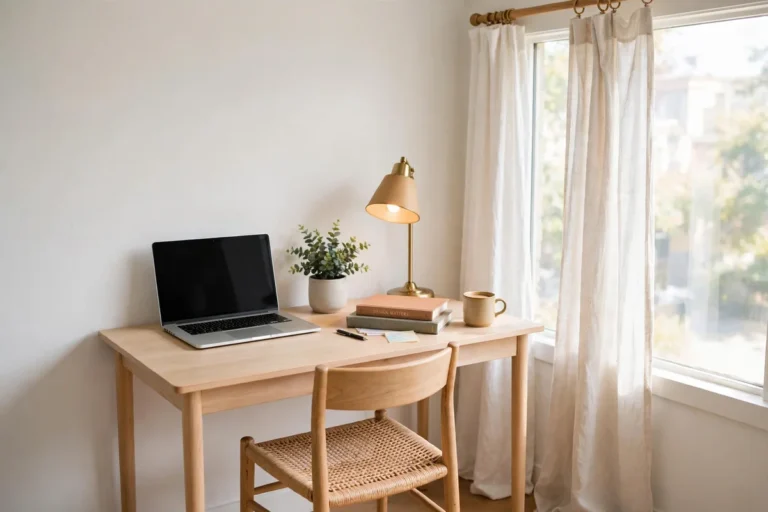
Bright, cool white — the kind that comes in the default paint can — can make a small room feel like a waiting room. Harsh, clinical, no shadows to give it depth. Warm whites like Swiss Coffee, Alabaster, or White Dove have a whisper of yellow in them, and that whisper does magic: rooms feel sunlit even at 9pm. I painted my bedroom Alabaster and it looked like it got an extra window. Bright white would have looked like a dental office. The difference is one letter on a paint chip. Don’t skip it.
2. Greige is the north-facing room’s best friend
Rooms that face north get cold, bluish light all day, and pale colors can go icy in them. Greige — that gray-beige hybrid — absorbs the cold light and gives it back warm. My studio’s north wall in a soft greige looked cozy at noon and golden at sunset. Same room in a pale gray looked like the inside of a refrigerator. If your apartment is dark on one side (whose isn’t?), greige evens it out. It’s the diplomat of paint colors.
3. Soft sage green: the “cozy but bigger” color
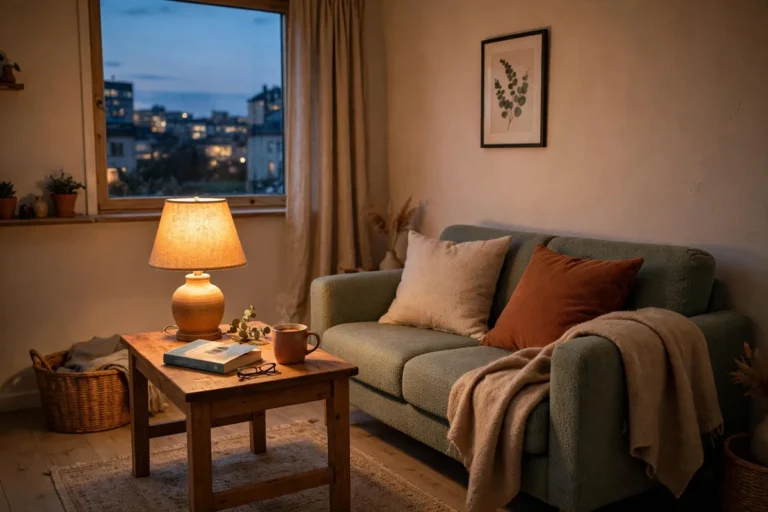
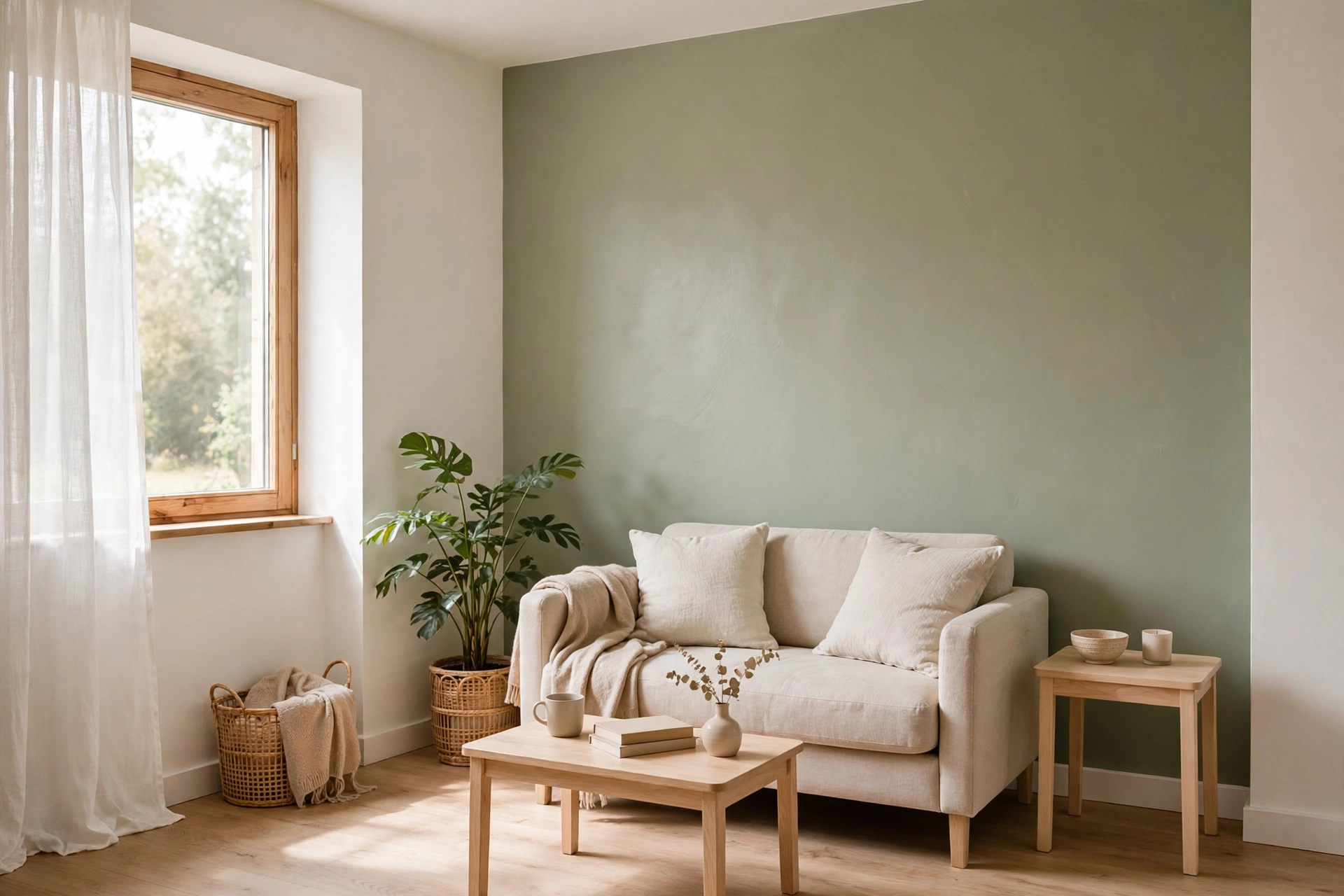
This is my personal religion. A soft, grayish sage green makes a small room feel like it continues past the walls — your eye reads green as “outdoors,” so the boundary of the room blurs a little. It sounds like nonsense until you see it. My living room went from “cramped box” to “garden room” with one coat. It also hides scuffs and dirt better than any light neutral, which in a small apartment where furniture touches the walls constantly is not a small thing. If you only paint one wall in your life, make it this one.
4. Dusty blue for bedrooms, and nowhere else (probably)
A muted, dusty blue in a small bedroom does two jobs: it visually recedes so the walls feel farther away, and it genuinely makes you sleepy in a good way. I was skeptical — blue bedrooms sounded like a hotel brochure — but I slept better the first week and the room felt calmer and somehow larger. Don’t go navy in a bedroom you work in, though. Dusty blue says rest. Navy says drama. Know which one you want at 7am. Our small bedroom decor ideas post has more tricks that pair with this one.
5. Pale blush that is absolutely not just for girls’ rooms
Hear me out. A pale, warm blush — think barely-there peachy pink — reflects light with a flattering glow that makes every skin tone and every piece of furniture look better. My friend painted her tiny bathroom this color and it looked like it had professional lighting. Men have painted their bathrooms blush and liked it. The trick is keeping it desaturated — if it reads “pink” on the chip, it’s too pink. If it reads “warm neutral with a secret,” you’ve got it.
6. Warm gray, not cold gray (the gray has to be hugged)
Gray can work in a small apartment, but only if it’s warm — a gray with brown or taupe undertones. Cold, blue-gray makes small rooms feel smaller because it creates hard edges and sharp shadows; warm gray softens edges so corners blur together and the room reads bigger. I learned this the expensive way with a cold gray hallway that looked like a parking garage. One warm-gray coat later, it looked like a foyer. Same hallway. Same lighting. Check the undertone on the chip before you commit — it matters more than the color itself.
7. The dark accent wall trick that sounds wrong but works
Okay, here’s the one that gets me arguments at dinner parties: painting ONE wall dark — deep forest green, navy, even charcoal — in a small room can make it feel bigger. Here’s why: the dark wall reads as infinite depth, like the room continues into shadow. It only works as one wall (or one corner), and it needs the other walls light. I did a charcoal accent wall behind my bed and the bedroom felt like it had a whole extra dimension. Three dark walls would be a cave. One dark wall is a stage. Commit to exactly one.
8. Paint the ceiling the same color as the walls
This is the pro move nobody talks about. That white ceiling line is a hard visual stop — your eye hits it and registers exactly where the room ends. Paint the ceiling the same color as the walls and the edges blur; the room feels taller and softer, like it has no lid. It’s especially wild in small bedrooms. I did this in a 10×12 room and people kept asking if the ceiling was higher than standard. It wasn’t. The paint was just lying to them, beautifully. Do the trim too — same color, no harsh lines anywhere.
9. Light colors bounce light; plan your lighting around the paint
Paint and light are a team, and paint without a lighting plan is half a renovation. Lighter walls bounce your lamps’ light around, so one floor lamp lights a pale room and barely dents a dark one. If you’re going dark on an accent wall, put a warm lamp near it so it glows instead of swallowing light. We broke down the whole relationship in our small apartment lighting ideas post — warm 2700K bulbs plus light walls is genuinely the highest-ROI room transformation under fifty dollars.
10. The 60-30-10 rule, shrunk for small rooms
Designers use 60-30-10 everywhere, but in a small apartment it matters more because there’s nowhere to hide a mistake. Sixty percent dominant neutral (your walls), thirty percent secondary color (big furniture, curtains), ten percent accent (pillows, art, that one weird lamp). The reason: one cohesive palette reads as “large intentional space,” while five competing colors chop a small room into visual pieces. Pick your palette from the paint chip, then shop everything else to match it. The room will look designed instead of accumulated.
11. Color-drench a nook to fake an extra room
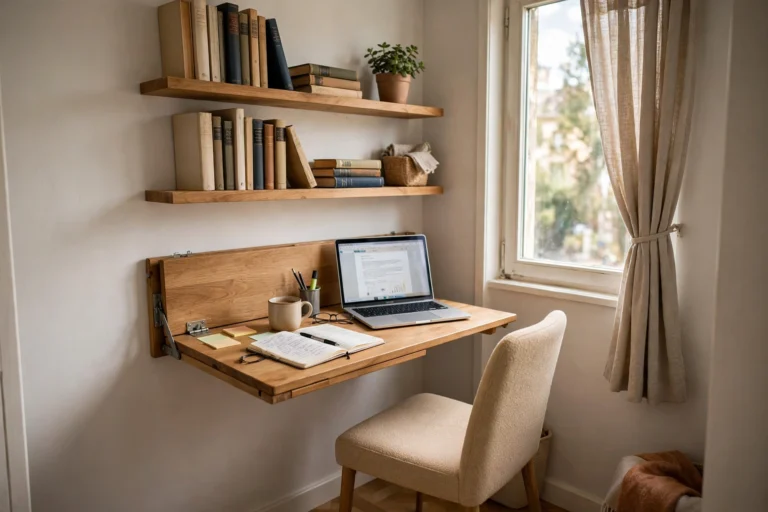
Got a reading corner, a desk alcove, a weird little hallway? Paint the nook one saturated color — walls, trim, everything — and it reads as a separate “room” instead of leftover space. I painted my desk corner a deep terracotta while the rest of the studio stayed warm white, and visitors asked about “the office” like it was a different zip code. It’s the cheapest room divider there is. One quart of paint, one afternoon, one new room. Beats a bookshelf divider by a mile.
12. Renters: paint the furniture and the door, not the walls
Can’t touch the walls? The deposit lives. Paint still works: one piece of furniture in a bold color — a bookshelf in forest green, a dresser in navy — gives you the accent-wall effect with zero landlord involvement. Interior doors are even better: a sage or terracotta door uses half a can, takes an afternoon, and most landlords never notice (or don’t care, since doors are easy to repaint). And if paint is truly off the table, the renter playbook is all reversible — there’s a whole guide in our renter-friendly decor ideas post. The color still gets in. It just takes the side door.
Quick answers
How can light paint colors make a small apartment look bigger?
Light, warm-toned paint reflects more light around the room and softens the edges where walls meet the ceiling, so your eye doesn’t register exactly where the room ends. That blurred boundary is what reads as “bigger.” Also keep your lighting warm — our small apartment lighting ideas post explains why 2700K bulbs plus light walls is the cheapest room transformation there is. For the living room specifically, our small living room decor ideas post pairs these paint tricks with furniture layouts that stretch the space further.
What color makes a small apartment look bigger?
Warm whites and pale neutrals with warm undertones — Swiss Coffee, Alabaster, soft greige — reflect the most light and soften room edges, which reads as more space. Cool, bright whites can actually make small rooms feel harsher and smaller.
Should I paint my whole small apartment white?
Not bright white — go warm white instead. And consider painting the ceiling and trim the same color so the edges blur. All-white-everything works, but warm white everywhere works better. If all-neutral bores you, one sage or dusty-blue accent wall keeps the airy feel with personality. And if you want more ways to make walls work harder, our small apartment wall decor ideas post covers gallery walls and art that pairs with these paint colors.
Can I use dark colors in a small room?
Yes — on exactly one wall. A single dark accent wall (deep green, navy, charcoal) creates a sense of depth that can make the room feel larger. Three or four dark walls will shrink it. One is a feature; four is a cave.
How do I pick paint colors as a renter who can’t paint walls?
Paint one piece of furniture or an interior door instead — same visual payoff, no lease violation. Or skip paint entirely and get color through textiles, art, and plants. The renter-friendly approach keeps your deposit safe and the color still lands.
The bottom line
Nobody measures your apartment when they walk in. They feel it — and paint decides the feeling more than anything else you own. One warm white, one brave accent wall, one ceiling that matches: that’s about a hundred dollars and a weekend, and it’s the closest thing to buying square footage that exists. Stop decorating around the beige. Pick a color like you mean it.