12 Small Nursery Ideas for Tiny Apartments That Actually Work
When we brought our first baby home to a 600-square-foot apartment, I cried. Not about the baby — about the nursery I thought I’d never have. Every Pinterest board showed these dreamy dedicated rooms with glider chairs and shiplap walls, and all I had was a corner of my bedroom that was currently housing a drying rack and three laundry baskets. Here’s what I learned the hard way: a tiny nursery doesn’t need a room. It needs a plan. These are the 12 small nursery ideas that actually worked for us — in real apartments, with real budgets, for real exhausted parents.
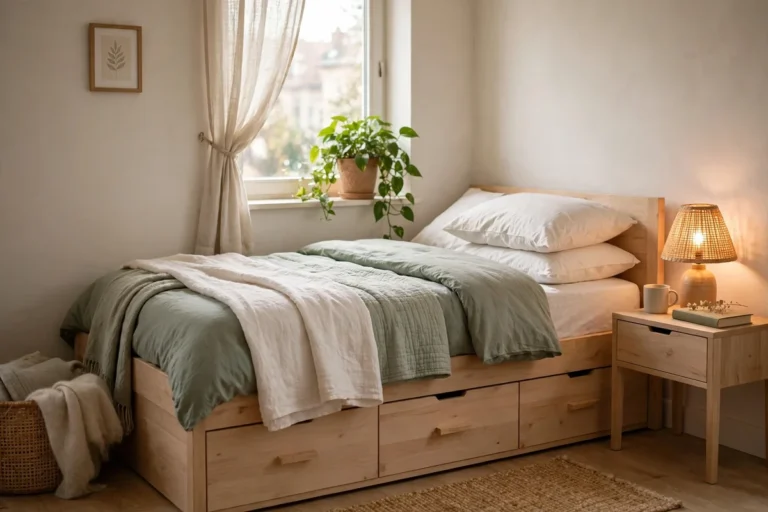
1. Claim a Corner, Not a Room
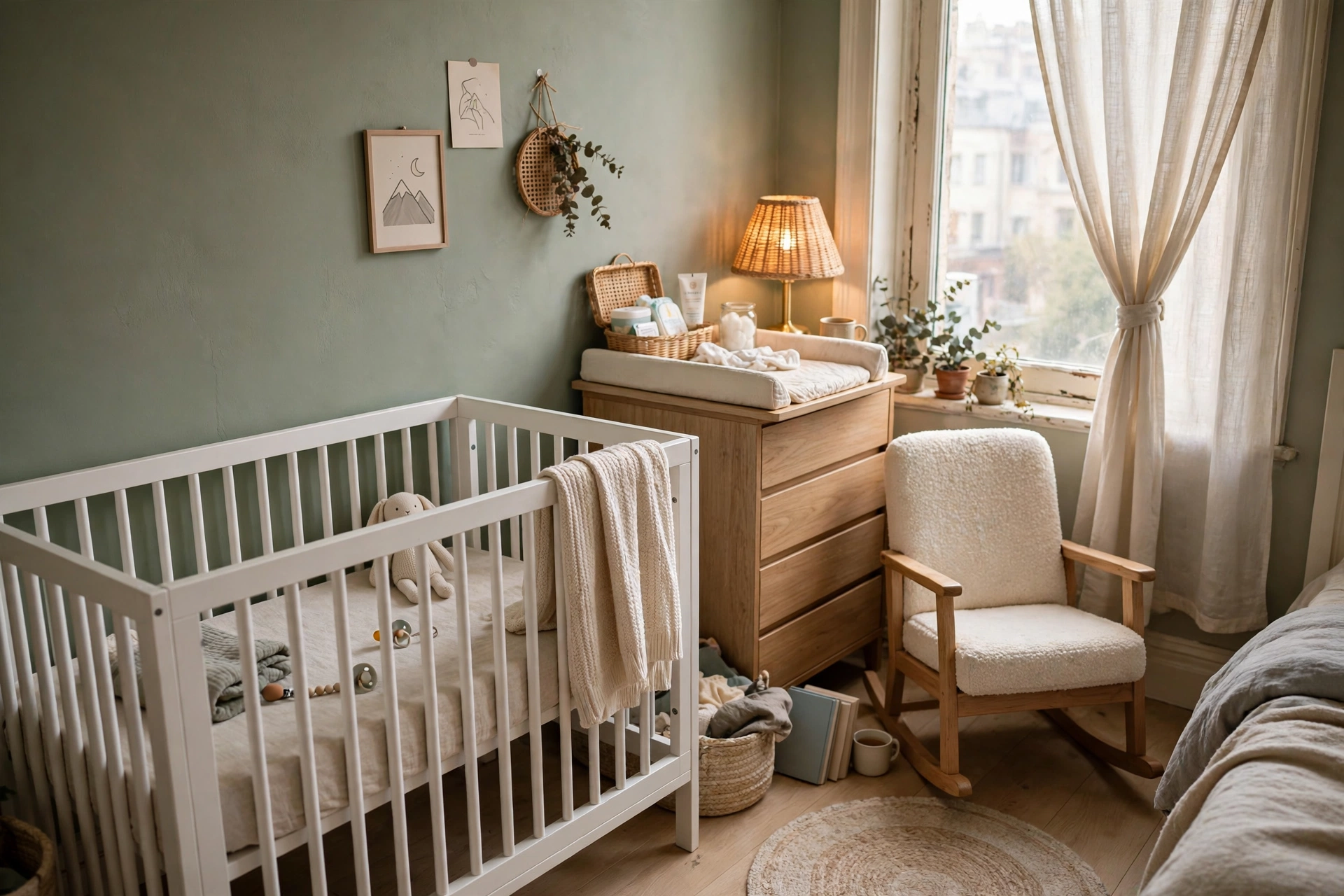
Forget “the nursery.” Pick one corner — even just a 5×5-foot patch of wall — and declare it baby territory. Put the crib there, hang one print above it, add a small rug underneath. That visual boundary does something weirdly powerful: it makes a bedroom corner feel like a nursery even though nothing structural changed.
I was wrong about this. I spent weeks stressing about finding a separate space before it hit me — our baby didn’t care about walls. She cared that her little corner smelled like her bedding and had her things in it. Corners are enough. Honestly? In a tiny apartment, a corner nursery keeps nighttime feeds so much easier anyway.
2. Get a Mini Crib (Not a Full-Size One)
This is the single biggest space-saver I can give you. A standard crib is about 55 inches long. A mini crib is around 38 inches — that 17-inch difference is enormous in a 10-foot room. Most babies fit in a mini crib until they’re around 18 months, and many models convert to a toddler bed.
- Look for: adjustable mattress heights (you’ll want it high for newborns), wheels for moving it, and a solid frame — not the folding travel kind.
- Skip: oversized “nursery sets.” You don’t need matching everything. Your baby can’t see the theme.
We bought ours secondhand for forty bucks and it was the best money we spent on the whole nursery setup. If you’re decorating a tiny space on a tight budget, check out my budget small apartment decorating ideas — several of those tricks saved us hundreds on baby stuff too.
3. Make the Dresser Pull Double Duty
A standalone changing table is a space hog and a wallet drain. Instead, put a changing pad on top of a dresser you already own (or a cheap secondhand one) and store diapers, wipes, and creams in the top drawer. When the diaper era ends, you just take the pad off — the dresser stays forever.
Here’s the thing nobody tells you: you’ll change a baby 8–12 times a day. That “changing station” needs to be near the crib, at a comfortable height, with one-handed drawer access. Test it before you commit. Open the drawer with one hand while holding a bag of rice in the other. If it fights you, rearrange.
4. Go Vertical — Walls Are Free Real Estate
Floor space is precious in a small apartment nursery, so train your eyes upward. Floating shelves above the dresser hold diapers, lotions, and a stack of folded onesies. Wall-mounted book ledges (narrow picture ledges, basically) display board books without taking a single inch of floor.
My favorite cheap trick: an over-the-door hanging organizer on the closet door. Six clear pockets, zero floor space, and it swallows socks, hats, pacifiers, and all the tiny things that vanish into thin air. If your apartment has a bedroom you already decorated, these same small bedroom decor ideas for maximizing wall space translate perfectly to a nursery corner.
5. Pick a Rocking Chair That Doesn’t Eat the Room
You need somewhere to sit for feeds. You do not need the massive plush glider your cousin’s registry lists. Look for a compact rocker or a sturdy armchair with good back support — ideally one that fits your life after the baby years, because a giant nursery-only chair is just future clutter.
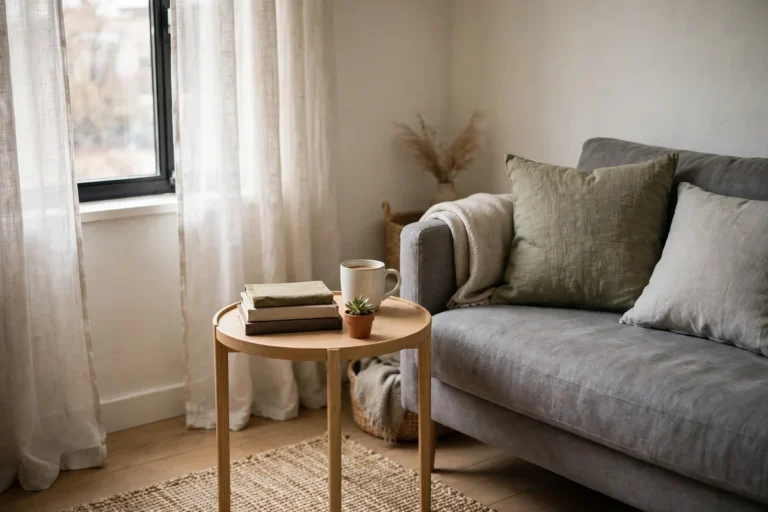
Blunt truth: the “perfect nursing chair” matters far less than having a small side table next to it. You will be trapped in that chair for 40-minute stretches at 3 AM, and you’ll need water, your phone, and a snack within arm’s reach. Chair + side table beats luxury glider with nothing beside it. Every time.
6. Choose Light, Calm Colors (Your Walls Are Your Friend)
You probably can’t paint — you’re renting — but even renters have options. Removable peel-and-stick wallpaper or a big swatch of fabric hung like a tapestry behind the crib can completely change a corner’s mood. I went with a soft sage on one accent area and it made our bedroom corner feel like an actual nursery instead of a bedroom with baby furniture.
Color genuinely affects how a tiny space feels. Dark, busy patterns shrink a corner; pale, quiet tones open it up. I wrote a whole guide on small apartment paint colors if you want the full breakdown, but the short version: warm whites, soft greens, and pale blues photograph well and soothe frazzled parents at midnight.
7. Layer the Lighting — Never Rely on the Overhead
Overhead lights are the enemy of a sleeping baby and a tired parent. Your nursery corner needs layers: a dim warm lamp on the dresser for nighttime diaper changes, maybe a plug-in nightlight near the crib, and curtains or blackout blinds if the window is nearby.
Here’s what I learned: a $10 dimmable warm bulb in a lamp you already own does 90% of what fancy nursery lighting does. You want light warm enough to see what you’re doing but dim enough that nobody (baby included) fully wakes up. My full small apartment lighting guide covers the dimmer tricks that made our 3 AM feeds survivable.
8. Use Furniture With Hidden Storage Everywhere
Babies come with shocking amounts of stuff — and in a small apartment, that stuff will eat you alive if it has nowhere to go. The crib area should have storage you can’t see: under-crib bins on wheels, a storage ottoman you put your feet on, baskets inside open shelving.
My rule: every piece of nursery furniture must hold things. Crib with drawers underneath? Yes. Ottoman that opens? Yes. Pretty chair with zero storage? It better be earning its keep some other way. Storage discipline is what keeps a 600-square-foot apartment livable once a baby moves in — the same philosophy behind my storage solutions for small homes post, which I basically followed like a checklist.
9. Hang a Curtain to Create “Rooms”
This was our secret weapon. A ceiling-mounted curtain track (IKEA sells them cheap) with a soft curtain lets you pull a divider between the nursery corner and the rest of the bedroom. It’s not soundproof, but visually closing off the baby’s space does two things: it signals “this is the calm zone,” and it lets you move around the bedroom without feeling like you’re on top of a sleeping infant.
Use a light, breathable fabric — nothing heavy that traps air. And mount it wide enough that it actually covers the corner when drawn. We pulled ours shut every night at 7 PM and it became part of the routine. Babies love routines. (Parents love routines more, honestly.)
10. Keep It Renter-Friendly (You’ll Thank Yourself at Move-Out)
Every nail hole in a rental is future you’s problem. Use adhesive strips, removable hooks, and freestanding furniture instead of wall-mounted pieces wherever possible. Peel-and-stick decals can give a crib wall personality without touching the paint.
I’ve been burned by landlords who treat a nail hole like a crime scene, so I now default to damage-free everything. My renter-friendly apartment decor ideas post has the full playbook — the nursery corner was basically a test run for all of it, and we got our full deposit back. Victory.
11. Add One Soft Thing Underfoot
A small round rug under the crib and chair does more than look cute. It deadens sound (huge in an apartment — your downstairs neighbors will notice the difference), it’s soft when you inevitably end up sitting on the floor at 2 AM assembling something, and it visually anchors the corner as its own zone.
Go for something low-pile and washable. Babies are, as a rule, disgusting. Anything that can’t survive the washing machine doesn’t belong in a nursery. Wool-blend flatweaves or indoor-outdoor rugs are my picks — cute enough for the room, tough enough for real life.
12. Leave Breathing Room — Don’t Overdecorate
The biggest mistake I see in small nursery ideas: cramming the corner so full of “nursery stuff” that it feels claustrophobic. Your baby needs a crib, a place to be changed, a place for you to sit, and storage. That’s the list. The fourth wall print, the themed mobile, the decorative garland? Optional. Nice, but optional.
Some funny thing happened when we stopped adding stuff: the nursery corner actually felt bigger. Empty wall space above the dresser made the crib area feel airy instead of crowded. In a tiny apartment, restraint is the most powerful decorating tool you own. Edit ruthlessly. Your future sleep-deprived self, stumbling to the crib at 4 AM, will thank you for the clear path.
Quick Answers
Can you have a nursery in a one-bedroom apartment?
Absolutely. Carve out a corner of the bedroom with a mini crib, a dresser-as-changing-table, and a compact chair. Most one-bedroom parents do exactly this — a dedicated room is a luxury, not a requirement.
How small can a nursery be?
A functional nursery corner can fit in about 5×5 feet. You need room for a mini crib, a small dresser or storage piece, and a chair with a side table. Anything beyond that is nice-to-have.
What nursery furniture should you avoid in a small apartment?
Skip standalone changing tables, oversized gliders, and anything that serves only one purpose. Every piece should earn its footprint — ideally with built-in storage.
How do you baby-proof a nursery corner in a rental?
Anchor the dresser to the wall (use removable furniture straps), cover outlets, keep cords out of reach, and secure the crib away from windows and blinds. Most baby-proofing is renter-friendly by nature — no drilling required.
The Bottom Line
Here’s what I’d tell any parent staring at their tiny apartment in a panic: your baby doesn’t need a room. They need you, a safe place to sleep, and enough diapers to survive the week. Everything else — the corner, the crib, the curtain divider — is just making that tiny patch of floor work as hard as it can. Start with the corner, get the mini crib, and build from there. You can always add more later. You almost never will, because it turns out the simple version works just fine.