13 Small Apartment Shoe Storage Ideas That Keep Your Floors Clear
Shoes are the most honest mess in a small apartment. You can pretend your kitchen is organized, you can shove clutter into the closet before guests arrive, but the pile of shoes by the front door tells the truth every single time.
I had eleven pairs stacked, leaning, and sliding around in what technically counted as my “entryway” — a strip of floor about as wide as my shoulders. My landlord wasn’t going to let me build anything, my budget was laughable, and my closet was already doing the job of three closets. Sound familiar?
Here’s what I figured out after a lot of trial, error, and one genuinely embarrassing morning where I couldn’t find matching shoes: shoe storage in a tiny apartment isn’t about buying a bigger rack. It’s about using the dead space you already have — behind doors, up walls, inside furniture — and being honest about how many shoes you actually wear.
1. The One-In-One-Out Shoe Audit (Do This First, Seriously)
Before you buy a single organizer, dump every pair of shoes you own onto the floor and be brutally honest. I found three pairs I hadn’t worn in over a year and a pair of sneakers with a hole I kept meaning to fix. I kept eight pairs: two everyday, one dressy, gym shoes, sandals, boots, and two seasonal.
Fewer shoes is the cheapest storage hack that exists. It’s also the hardest. But every pair you donate is roughly half a shelf you don’t need to build.
- Lay out every pair and count them
- Put the “maybe” pairs in a bag for 30 days — if you don’t dig them out, donate the bag
- Keep a mental rule: one new pair in, one old pair out
2. Over-the-Door Pocket Organizers (The Renter’s Best Friend)
That clear vinyl thing your mom used for toiletries? It holds shoes beautifully. Most over-door organizers have 12 to 24 pockets, and they hang from the door with hooks — no screws, no holes, no landlord drama.
I hung one on the inside of my bedroom closet door and it swallowed my flats, sandals, and sneakers. Total cost: less than a takeout meal. If you’re renting, this one is non-negotiable — it pairs perfectly with other renter-friendly apartment upgrades that don’t touch your deposit.
- Choose fabric pockets over clear plastic — they last longer and look calmer
- One pocket per pair works best for sandals and flats; bulkier shoes go in bigger pockets
- Hang it on a door you actually open daily so you see your options
3. Slim Entryway Shoe Racks (Thin Is the Whole Point)
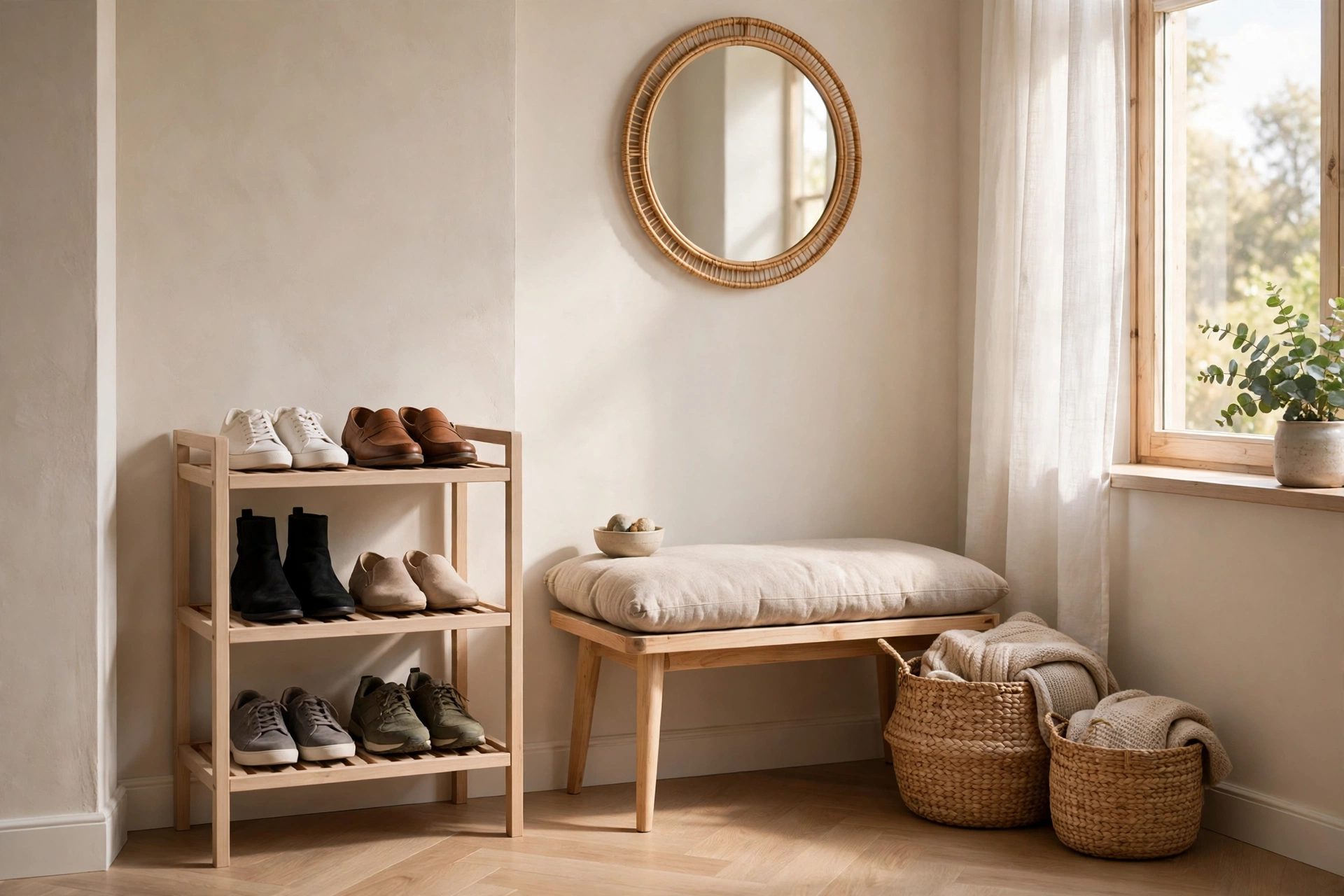
Standard shoe racks are about 12 inches deep. In a narrow hallway, that’s a shin-bruising obstacle. Slim racks — 6 to 8 inches deep — are built specifically for tight entryways. They tilt the shoes slightly so they slot in like dominoes.
Measure your wall clearance before you buy anything. My first rack stuck out just enough that I stubbed my toe on it daily for two weeks. A slimmer version fit flush and the toe-stubbing era ended immediately.
- Aim for 6-8 inches of depth for narrow hallways
- Tilt-style racks fit 8-10 pairs in a footprint smaller than a doormat
- Look for stackable units so you can grow vertically, not outwardly
4. Under-Bed Shoe Drawers
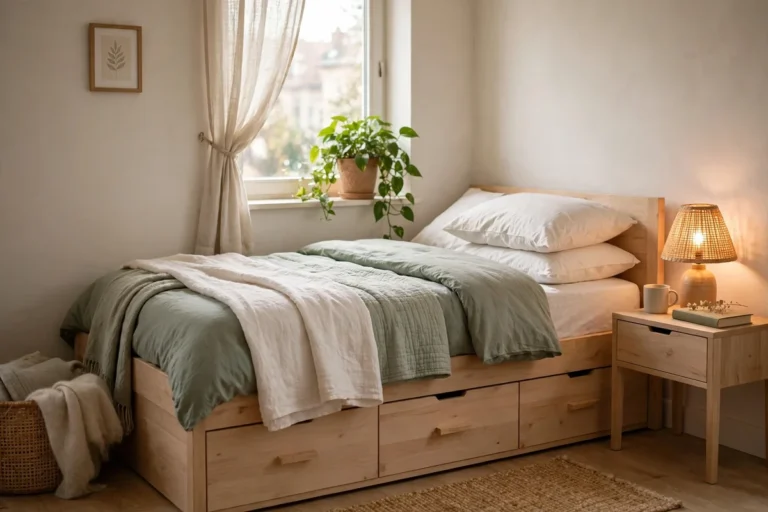
Under-bed space is prime real estate that most of us waste on dust. Flat rolling drawers — or even shallow boxes on wheels — slide under the bed and swallow out-of-season shoes completely.
This is where my boots live from April to October. Out of sight, off the floor, and I don’t have to think about them for six months. If your bedroom needs more hidden storage tricks like this, my guide to hidden storage ideas goes deeper.
- Flat drawers on casters beat loose boxes — they slide out without dragging
- Label each drawer by season so you stop opening all of them
- Line drawers with an old towel if your floors scratch easily
5. Floating Shelves Above the Door Frame
There’s a strip of wall above your front door doing absolutely nothing right now. Two or three floating shelves up there become a display spot for your nicer shoes — boots, statement heels, the pair you actually like looking at.
I’ll be honest: this isn’t for your daily-worn sneakers. It’s for the shoes you reach for weekly or less, and it looks surprisingly good. A pair of clean boots on a wooden shelf reads as decor, not clutter.
- Mount shelves at least 78 inches high so tall guests don’t bump them
- Keep only good-looking, clean shoes here — it’s display, not a dumping ground
- Two studs or solid anchors per bracket; shoes are heavier than books
6. A Storage Bench With a Split Personality
A bench with hidden storage inside is the single best furniture upgrade a small entryway can get. You sit to put on your shoes, lift the lid, and your shoes live underneath. One piece of furniture, three jobs.
Mine holds six pairs plus an umbrella, and it’s where I sit every morning. Multifunctional pieces like this are the backbone of tiny living — here’s a full roundup of multifunctional furniture ideas that pull the same double-duty trick.
- Measure your tallest shoes before buying — boots need a taller bench
- Hinged lids beat lift-off lids; you’ll open it one-handed with a shoe in the other
- Add a cushion on top and it reads as seating, not storage
7. Behind-the-Door Hanging Racks
If over-door pocket organizers feel too flimsy for heavier shoes, rigid hanging racks are the upgrade. They’re metal or sturdy plastic frames that hook over the door and hold 10-18 pairs on tilted shelves.
The genius part: the space behind a door is space you literally never use for anything else. It’s dead square footage, and a door rack brings it to life. I put one on the back of my bathroom door for gym shoes, because my gym shoes and I have an understanding that they don’t live near my nice things.
- Check door clearance first — the door still has to close
- Foam padding on the hooks protects the door’s finish (landlord-proof)
- Balance the weight evenly so the door doesn’t swing on its own
8. Wall-Mounted Flip-Down Shoe Racks
These are my favorite piece of shoe-storage engineering. When you need them, you flip them down and they hold your shoes on angled shelves. When you don’t, they fold flat against the wall like a wall cabinet.
They’re pricier than a pocket organizer, but for a permanent small apartment, they’re worth every penny. Two flip-down units on the wall beside my door hold ten pairs and take up zero floor space when closed.
- Install into studs or use heavy-duty anchors — a loaded rack weighs 20+ pounds
- Mount at a height where you can grab shoes without bending
- Paint them the same color as your wall and they visually disappear
9. Tension-Rod Shelves Inside Closets
Here’s a trick nobody talks about: wedge a tension rod across your closet at an angle, and it becomes a shoe shelf. No screws, no shelf brackets, nothing permanent. The shoes sit toe-down on the rod like birds on a wire.
I use two tension rods in my coat closet — one high for out-of-season pairs, one at ankle height for the current rotation. My full closet strategy lives in my closet organization guide, which this trick borrows from.
- Measure closet width and buy the right tension-rod size — too short and it’ll slip
- Angle the rod slightly so toes point down and heels stay put
- Works best for heels and sneakers, not so much for heavy boots
10. Vertical Stacking Towers in Corner Gaps
Every apartment has that weird narrow gap — between the fridge and the wall, beside the wardrobe, next to the washing machine. Stacking shoe towers are built exactly for those gaps. They go up to 6 feet tall in a footprint smaller than a dinner plate.
One tower in my bedroom corner holds twelve pairs. TWELVE. In a space that previously held a spider and a forgotten charger. Vertical storage is the whole game in small apartments — my clever storage solutions guide is full of the same go-up-not-out logic.
- Measure the gap first; towers come in a few standard widths
- Put the heaviest shoes at the bottom so the tower doesn’t wobble
- Anchor tall towers to the wall with an anti-tip strap
11. Under-Stair and Landing Storage (If You’ve Got Stairs)
In duplex-style or loft apartments, the staircase landing and the space under the stairs are shoe-storage gold. A low bench, a few cubes, or even open shelving under the stairs can hold an entire household’s shoes.
The under-stair zone stays dark and cool, which shoes actually like. Just keep it dry — put a moisture absorber in there if your building runs damp.
- Open cubbies work best here — shoes air out and you can see everything
- Add motion-sensor lights; under-stair areas are always gloomy
- Label cubbies per person if you share the apartment
12. The Entryway “Landing Strip” With Cubbies
Instead of fighting the shoe pile, give it an official home right where it lands. A small cubby unit at the door — even just a 2×2 grid — catches shoes the moment they come off your feet.
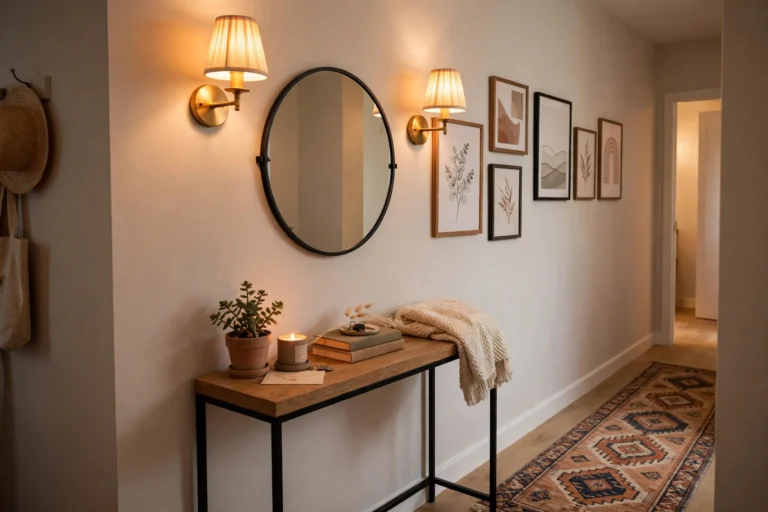
The trick is matching the cubby count to your actual rotation, not your whole collection. Four to six cubbies handle the daily-wear pairs; everything else lives elsewhere. This is the shoe version of entryway organization — my entryway organization guide has the full system for no-foyer apartments like mine.
- One cubby per person per two pairs keeps the unit small
- Add a tray underneath for wet or muddy shoes
- Keep a small basket on top for keys and sunglasses so the strip does everything
13. Seasonal Rotation Bins (The Real Secret)
Here’s the thing nobody admits: you don’t need storage for 20 pairs in your living space. You need storage for the 8 you’re wearing this season. The rest can live in labeled bins in the top of the closet, under the bed, or wherever your deep storage is.
Twice a year — when boots go away and sandals come out — do a 20-minute swap. Your entryway breathes, your rack stops overflowing, and you stop pretending you can find anything. This one habit does more than any organizer I own.
- Use clear bins or label opaque ones — unlabeled bins become black holes
- Toss a dryer sheet in each bin so shoes smell fine next season
- Do the swap when you switch closets for the season, not separately
Quick Answers
How many shoes should a small apartment hold?
Honestly? Whatever you wear in a season, plus a few occasion pairs. For most people that’s 8-12 pairs in active rotation. The rest belong in deep storage bins, not in your hallway.
What’s the best renter-friendly shoe storage?
Over-door organizers, tension rods, and freestanding slim racks — nothing touches the walls permanently. Your deposit stays safe and your shoes stay off the floor.
Where do I put wet or muddy shoes?
Keep a waterproof boot tray by the door and let them dry there before they join the rotation. Never put damp shoes into a closed bin or behind a door — they’ll smell like regret.
How do I stop shoes from smelling in a small space?
Airflow is everything. Open cubbies beat closed cabinets for daily shoes, and a box of baking soda or a few dryer sheets in each storage zone goes a long way in a tiny apartment.
The Bottom Line
Shoe storage in a small apartment comes down to three moves: own fewer shoes than you think you need, use the vertical and behind-door space you’re ignoring, and rotate seasonally so your entryway only ever holds this season’s pairs. Do those three things and the shoe pile disappears — no renovation required, no landlord permission needed, and your toes stay un-stubbed.
Now go count your shoes. I’ll wait.