14 Small Apartment Armchair Ideas That Turn One Chair Into Your Favourite Spot
Here’s what I didn’t understand about armchairs until I lived in a flat the size of a generous parking space: a sofa is for the room, but an armchair is for you. The sofa is where guests sit, where the laptop lives, where laundry gets folded. The armchair is the one seat nobody else is allowed to claim. It’s where the first coffee of the day happens, where the book gets finished, where you end up asleep at 9 p.m. with the telly still on. In a small apartment, that one chair punches way above its weight — if you pick the right one.
I bought my first armchair because it was cheap and it was there. It was enormous, it swallowed the corner, and sitting in it felt like being hugged by a mattress that had opinions. I gave it away within a month. The chair I have now is half the size, cost a bit more, and I use it every single day. That’s the whole game with armchairs in small flats: the right chair disappears into your routine. The wrong one just takes up floor space and glares at you.
Quick Answers
- What size armchair fits a small apartment? Look for a chair 70–85 cm wide and 75–90 cm deep, with a seat height around 45 cm. Anything wider than 90 cm starts eating the room, and anything deeper than 95 cm will leave you with nowhere to put your feet — or your coffee.
- Where should I put an armchair in a small apartment? In the corner with the best light, angled slightly towards the room rather than flat against the wall. A chair jammed into a corner feels like a waiting room; the same chair pulled out 10 cm and turned 15 degrees feels like a reading nook.
- Is an armchair worth it if I already have a sofa? Yes, if you actually sit in it — one good chair gives you a second seating zone without a second sofa, and in a studio it can mark the boundary between living and sleeping. If it becomes a clothes pile within a week, though, it was never a chair problem. It was a storage problem.
1. The Small-Scale Classic (The Chair That Doesn’t Shout)
Start here, because most people buy too big. A proper small-scale armchair — compact arms, a seat that fits one person and one person only, legs you can see underneath — does everything a big chair does without colonising the room. The trick is the arms: slim, straight arms instead of fat rolled ones save you 15 cm of width you didn’t know you were losing. Sit in it before you buy it, obviously. A chair that looks perfect and feels like a park bench is a sculpture, not furniture.
2. The Reading Nook Chair (One Chair, One Lamp, No Excuses)
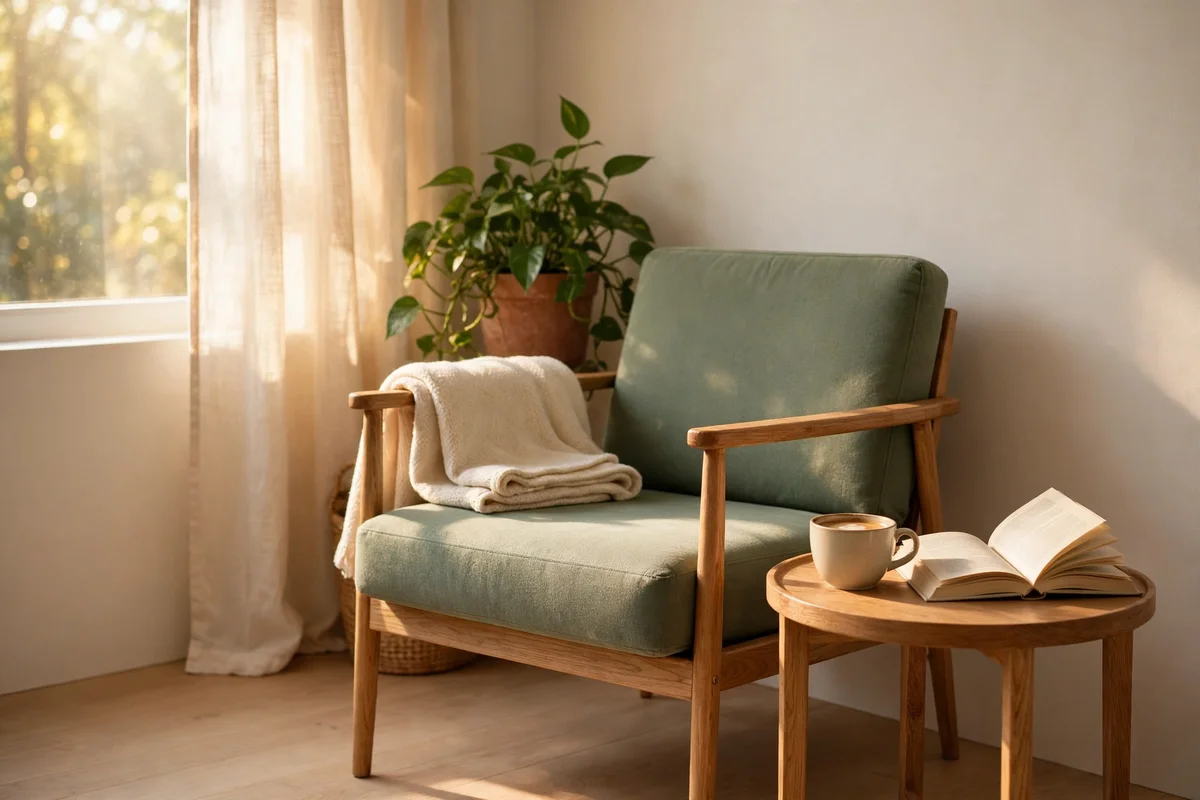
This is the setup that turned my armchair from furniture into a habit. Chair, small side table, one decent lamp, done. The lamp matters more than people think — a warm bulb at shoulder height is what makes you actually pick up the book instead of the phone. If you’ve got a corner doing nothing, my small apartment reading nook ideas build the whole scene around this exact chair, but honestly, a chair and a lamp is already 90% of a reading nook. The other 10% is just you deciding to sit down.
3. The Swivel Chair (For People Who Can’t Commit to a Direction)
I am the person who turns the chair towards the window for coffee, towards the TV for a film, and towards the kitchen to keep an eye on the hob. A swivel armchair lets you do all of that without dragging furniture across the floor every twenty minutes. In a studio especially, a swivel chair is secretly two chairs: one facing the living area, one facing the bed or the desk, depending on the hour. Just check the base — cheap swivels wobble, and a wobbling chair is funny exactly once.
4. The Armless Accent Chair (When the Room Is Small and the Chair Must Be Smaller)
Armless chairs look like a compromise and then they quietly win. Without arms, the chair reads as a seat rather than a throne, which means it fits into spots a normal armchair can’t — at the end of a desk, in a hallway, tucked under a window. You lose the elbow rest, sure. You gain a chair that slides under a console table when guests come over. If your flat is so small that a normal armchair feels like a sofa’s understudy, go armless and stop apologising for it.
5. The Chair That Matches the Sofa (Without Being a Clone)
A matching set is the safe choice, and safe isn’t always wrong. A chair in the same fabric or colour family as your sofa ties the room together without any thinking — it just looks like it belongs. The trick is not to go identical. Same colour, different shape. Same shape, different colour. My small apartment sofa ideas cover the sofa side of this pairing, but the short version is: if the sofa is big and soft, pick a chair with cleaner lines, and the room will look designed instead of delivered in a box.
6. The Statement Chair (One Loud Thing in a Quiet Room)
Sometimes the right move is the opposite of blending in. One bold chair — mustard, emerald, a pattern your grandmother would have loved — in an otherwise calm room gives the whole flat a personality. It’s the cheapest way to make a rental look like someone with taste lives there. The rule is one loud thing, not five. One statement chair plus a neutral sofa plus plain walls works. A statement chair plus a statement rug plus statement curtains is a circus, and you’re the clown living in it.
7. The Recliner That Doesn’t Look Like a Recliner
Old recliners had a reputation: big, brown, and permanently stuck halfway between sitting and lying down. The new ones are a different animal — slim profiles, proper fabrics, a footrest that actually disappears when you don’t need it. In a small flat, a recliner that looks like a normal armchair is the closest thing to a nap spot that doesn’t require a bed. The catch is the clearance: you need 30 cm behind it for the back to tilt, so measure before you buy, or you’ll discover the problem at 11 p.m. when the chair hits the wall.
8. The Chair With a Footstool (The Two-Piece Trick)
A footstool is the armchair’s best friend and the small flat’s best cheat. Chair plus ottoman gives you the full stretch-out experience of a chaise, and when you don’t need it, the ottoman slides under a console table or becomes a side table with a tray on top. It’s two pieces of furniture for the price of one footprint. I keep mine tucked under the window and pull it out every evening like a little ritual. Your feet will write me a thank-you note.
9. The Leather (or Leather-Look) Chair That Ages Well
Fabric chairs show every coffee ring and every crumb. Leather — real or decent faux — wipes clean, survives the cat, and gets better looking as it scuffs up. In a small flat where the chair sits two metres from where you eat, that matters. The downside is the cold: leather is chilly in winter until you warm it up, so keep a throw on it and nobody will ever know. And if the budget says faux, get good faux — the cheap shiny kind peels within a year and looks like a lizard shedding its skin.
10. The Vintage Find (The Chair With a Past Life)
Second-hand armchairs are the best-kept secret in small flats. Old chairs were built when furniture was furniture — solid wood frames, proper springs, and sizes that fit actual houses instead of showrooms. I found mine at a charity shop for less than a takeaway, had it re-covered in a plain fabric, and it’s the best seat in the flat. Check the frame by lifting one front corner: if the other corner lifts too, the frame is solid. If it twists like a wet towel, walk away. A good frame plus new fabric beats a new chair with a bad frame every time.
11. The Chair by the Window (The Cheapest View Upgrade)
Put the chair where the light is. A small armchair by the window turns a dead corner into the best seat in the flat — morning coffee with actual sunlight, an evening read while the street goes quiet. The chair doesn’t even need to be fancy; the window does the work. Just keep it out of direct blazing sun if the fabric is dark, or you’ll be sitting on a frying pan by July. A sheer curtain fixes that for almost nothing, and the chair stays the best seat in the house.
12. The Rocking Chair (Yes, Really — Not Just for Grannies)
I know. Rocking chairs have an image problem. But a slim, modern rocker in a small flat is genuinely lovely — it moves, it soothes, and it takes up no more room than a normal chair. It’s also the chair guests always end up in, because everyone secretly likes rocking. The modern ones don’t look like they came from a porch in 1952; they look like a normal armchair that happens to rock. If your evenings tend towards a glass of something and a slow hour, this is your chair. Just leave space behind it, or the wall will learn to hate you.
13. The Chair That Doubles as a Guest Seat (The One That Earns Its Rent)
In a small flat, every piece of furniture has to justify itself, and the armchair is no exception. A lightweight chair — one you can actually pick up with one hand — becomes your spare dining seat, your desk chair when the proper one is taken, your “pull it over here, sit with me” chair. Heavy chairs stay put and become monuments. Light chairs get used. If you buy one chair and it never moves, ask yourself whether it’s furniture or a very expensive doorstop. It’s the same thinking behind my small apartment multifunctional furniture ideas — in a small flat, the piece that moves is the piece that works.
14. The Rule That Keeps Every Armchair Working (Use It or Lose It)
Here’s the honest ending: an armchair only earns its floor space if someone actually sits in it. The chair that becomes a clothes pile, a bag dump, or a place where the laundry goes to think about itself is not a chair — it’s a very expensive shelf. So here’s the rule: the chair gets one job and one clear spot. A throw lives on it, a book lives next to it, and the clothes go in the wardrobe. I clear mine every night before bed, all thirty seconds of it, and every morning it’s waiting for me like it means it. That’s the whole secret. The best armchair in a small apartment isn’t the prettiest one in the shop. It’s the one that’s warm at 7 a.m. because someone was already sitting in it.
FAQ
What is the best armchair size for a small apartment?
A chair 70–85 cm wide and 75–90 cm deep works in most small flats, with a seat height around 45 cm. Leave at least 60 cm of clear space in front of it so you can sit down and stand up without doing a sideways shuffle.
Should an armchair match the sofa?
It doesn’t have to match exactly — same colour family or same fabric type is enough to tie the room together. A chair that’s deliberately different in shape but close in colour looks designed; a chair that’s identical to the sofa can make a small room feel like a furniture showroom.
Where is the best place for an armchair in a studio apartment?
In the corner with the best natural light, angled towards the room, where it can mark the edge of your living area. A chair between the sofa and the bed works as a soft divider, and a swivel chair can face either zone depending on the time of day.
Can I put an armchair in a bedroom?
Yes — a small armchair in a bedroom corner is one of the best uses of dead space in a flat. It gives you somewhere to sit that isn’t the bed, which sounds trivial until you’ve tried getting dressed standing up every morning. Keep it slim and skip the footstool if the room is tight.
How do I stop my armchair becoming a dumping ground for clothes?
Give the clothes a proper home first — if there’s nowhere else for them to go, the chair will always lose. Once the wardrobe and hooks are sorted, clear the chair every night before bed. If you need more ideas, my 20 clever storage solutions for small apartments will fix the root cause, and if the chair still ends up buried, my small living room decor ideas have a few more tricks for keeping surfaces clear.
Bottom Line
An armchair in a small apartment isn’t a luxury — it’s the one piece of furniture that’s entirely yours. The sofa is shared, the table is shared, the bed is for sleeping. The chair is where the day actually happens: the coffee, the book, the ten minutes of doing nothing before the evening starts. Pick one that fits your body and your floor plan, put it where the light is, and then actually sit in it. The best chair isn’t the biggest or the most expensive one in the shop. It’s the one with a dent in the cushion where you always sit, a throw that’s always slightly out of place, and a book on the table next to it that’s half finished — because somebody lives there.